The Source 2 Overhaul: How CS2 Rewrote the Rules of Skin Valuation
Here’s the thing nobody warned you about when CS2 dropped in September 2023: your inventory wasn’t just getting a facelift. It was getting a full-on identity crisis. Source 2 didn't just make Counter-Strike look prettier; it fundamentally rewired how every single skin interacts with light, texture, and the environment. Some skins went from "meh" to "must-have" overnight. Others—once considered pristine—suddenly looked like they’d been left out in the rain.
I’ve been watching this market since the days of the original Kato ’14 hype, and I can tell you honestly: nothing has shaken skin values like this engine transition. Not the RMR sticker crash, not the glove case introduction. This was different.
How PBR Changed the Game
Source 2 introduced three critical properties for every surface:
- Albedo (base color) – This is the actual paint. No more baked-in fake shadows.
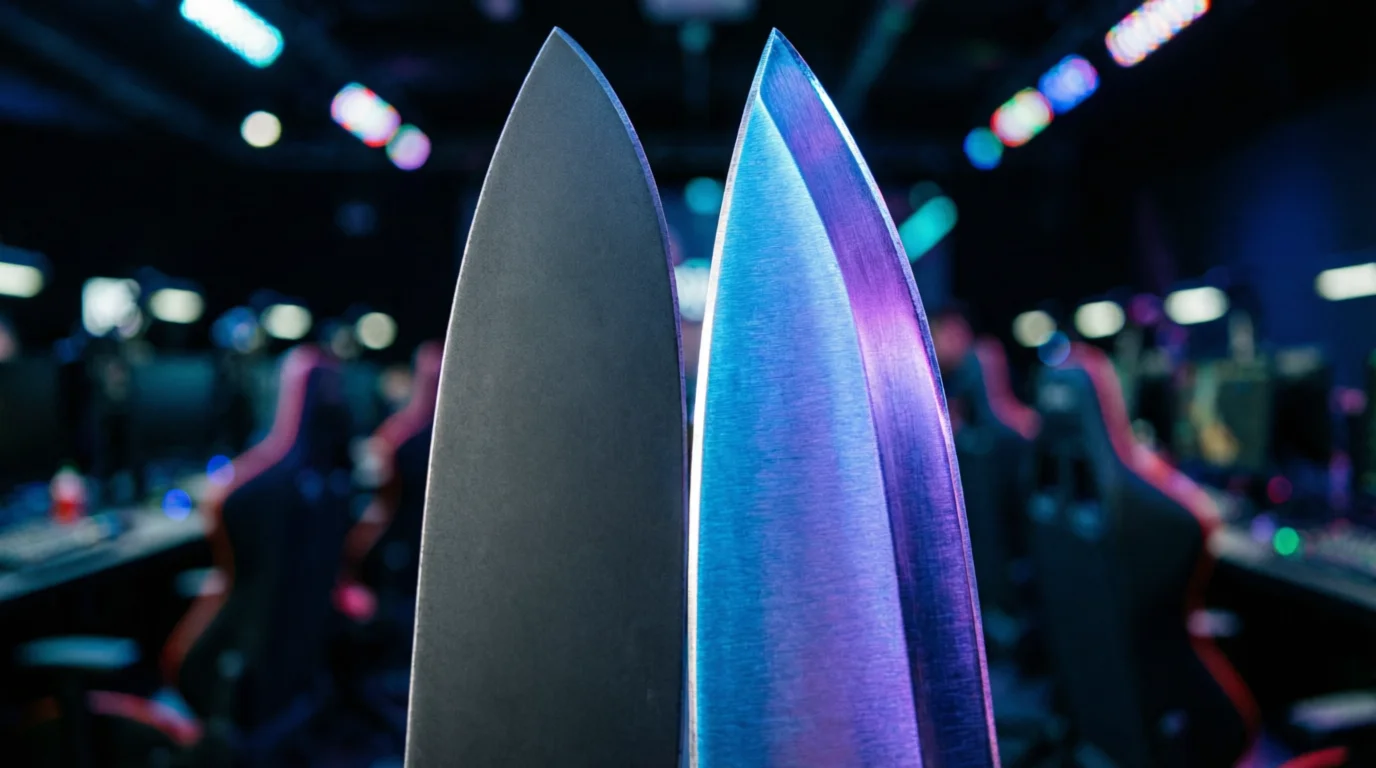
- Roughness – Determines how light scatters. A rougher surface (like a matte finish) diffuses light. A smooth surface (like polished steel) creates sharp reflections.
- Metalness – Dictates whether a surface behaves like a conductor (metal) or dielectric (plastic, wood, rubber). This is where the magic happens.
Dynamic Lighting: The Map Factor
Nobody talks about this enough, but the map you’re playing on now dramatically changes how your skin looks. This wasn’t a thing in CS:GO.
I personally think this is the most underrated change. It means a single skin can look like two different items depending on the round. Some players hate this inconsistency. Others—especially traders—have started asking for “good lighting screenshots” before buying. It’s become a real point of negotiation.
The Winners: Skins That Got a Source 2 Glow-Up
Some skins were basically designed for this engine. They didn’t just survive the transition—they thrived.
M4A1-S | Printstream
Before CS2, Printstream was popular but not legendary. In Source 2, it became the gold standard for “clean” skins. The white panels now have a subtle pearlescent shift. The silver accents reflect the environment. The black grip shows actual grain. When the community first saw it on Inferno’s B site under the neon lights, the reaction was immediate. Prices jumped from around $30-40 to over $100 in the first week of the Limited Test. People were panic-buying Factory New copies.
AK-47 | Fire Serpent
The old dragon was already a grail skin. But Source 2 gave it depth. The red scales now have a faint metallic sheen. The gold accents pop with actual specular highlights. The wooden parts show grain. In CS:GO, the Fire Serpent often looked flat in darker areas. Now, it catches light on the playside in a way that makes it feel alive. The price didn’t jump as dramatically as Printstream (it was already $2,000+ for FN), but the demand for low-float copies surged.
M9 Bayonet | Doppler
This is the poster child for the Source 2 glow-up. Doppler phases—especially Ruby and Sapphire—were already expensive. But CS2 made them electric. The color saturation increased. The reflections became sharper. A Phase 1 Doppler that looked “okay” in CS:GO now shows distinct color bands with metallic transitions. The community quickly realized that the finish catalog (the internal pattern ID) matters more than ever. Some patterns that looked identical in CS:GO now show completely different color distributions. This created a new mini-market for “good pattern” Dopplers.
Karambit | Fade
Fade percentages were always a thing. But in Source 2, the gradient became smoother, more organic. The yellow-to-pink transition now has subtle color bleeding. The purple tip reflects the environment. A 90% Fade in CS:GO might look like a 95% in CS2 just because the engine handles the gradient better. Prices for “Max Fade” patterns (like the 95-100% range) went through the roof. Some sold for 50-60% above their CS:GO peak.
USP-S | Kill Confirmed
The blood splatter on this skin was always a bit flat. In Source 2, it got a texture bump. The blood now has a slight wetness to it. The white base shows subtle wear patterns. The grip looks like actual rubber. It’s not a dramatic change, but it made the skin feel premium.
The Losers: Skins That Looked Better in CS:GO
Not everyone got a promotion. Some skins took a hit. And the community—especially on Reddit and Twitter—was loud about it.
Glock-18 | Fade
Here’s the controversial one. In CS:GO, the Glock Fade had a distinctive “pearl” finish—a soft, almost milky gradient that collectors loved. Source 2’s PBR system made it too metallic. The reflections became harsh. The gradient lost its smoothness. Many players complained that it looked “plastic” or “like a toy.” The price actually dipped for a few weeks after launch. It recovered, but the demand for specific patterns (like the “pearl” ones) shifted.
AWP | Dragon Lore
This sounds crazy, but hear me out. The Dragon Lore’s value is so tied to its status symbol that any visual change—even a positive one—causes volatility. In Source 2, the dragon’s scales became more defined, but the gold accents got too bright for some tastes. The skin lost its “battle-worn” charm. Factory New copies looked almost sterile. The community was split: some loved the clarity, others felt it lost its soul. The price didn’t drop, but the trade volume of low-float copies actually decreased for a month.
M4A4 | Asiimov
Karambit | Case Hardened
“Blue gems” were already a niche market. But Source 2 broke something. The heat-treated coloring (the blue/purple/gold pattern) now interacts with the environment in unpredictable ways. A pattern that looked solid blue in CS:GO now shows greenish tints on certain maps. The community spent weeks arguing about “true” blue gem patterns. Some traders lost money because they bought patterns that looked blue in CS:GO screenshots but turned out to be purple-heavy in CS2.
The Market Impact: September 2023 and Beyond
When the CS2 Limited Test dropped in March 2023, the smart money moved fast. Within 48 hours, Printstream prices jumped 40%. Doppler phases saw 20-30% increases. People were buying Factory New versions of any skin with metallic finishes.
Then the full release hit in September. The first week was chaos.
- Printstream family (Desert Eagle, M4A1-S, USP-S): +60-80% over CS:GO prices.
- Doppler finishes: +35-50% for Ruby/Sapphire, +15-20% for Phase 1/2.
- Fade finishes: +25-40% for “good” patterns.
- Case Hardened: -10% initially, then stabilized as the community learned which patterns looked better.
- “Pearl” finishes (Glock Fade, some Chroma skins): -5-15% as collectors adjusted.
The real story wasn’t just price movement. It was the float value obsession. In CS:GO, a 0.000x float was nice but not essential. In CS2, low float skins look significantly better because PBR amplifies every imperfection. A 0.01 float Printstream has visible scratches. A 0.0001 float one looks flawless. The premium for “max float” (lowest possible for that skin) doubled or tripled overnight.
Community Reactions: The Good, the Bad, and the Weird
The CS2 subreddit was on fire for weeks. Some highlights:
- “Source 2 made my $2,000 skin look like a $200 skin” – This was a common complaint from Case Hardened owners. The unpredictability of the heat-treated pattern under PBR lighting frustrated a lot of people.
- “My Printstream is now my favorite skin” – The dominant sentiment. Players who had sold their Printstreams before the Limited Test were kicking themselves.
- “Why does my $1,500 Glock Fade look like a toy?” – The pearl finish controversy was real. Some players even asked for a “CS:GO legacy mode” to revert the look.
- “Blue gem market is dead” – This was an overreaction, but it shows how much volatility the engine created. The market eventually settled, but it took 2-3 months.
From watching the market for years, I can tell you: the September 2023 launch was the most volatile period since the introduction of the Souvenir Dragon Lore. People were making and losing thousands of dollars based on screenshots of a skin on Dust II vs. Nuke.
The Technical Reason Behind the Changes
Here’s the nitty-gritty. CS:GO used a specular workflow for its materials. Every skin had a “gloss” map that told the engine how shiny a surface was. But it was simple—just a black-and-white map. CS2 uses a metalness/roughness workflow with three separate maps:
- Albedo (RGB): The base color, with no lighting information baked in.
- Roughness (grayscale): 0 = mirror smooth, 1 = completely matte.
- Metalness (grayscale): 0 = non-metal (plastic, cloth, wood), 1 = metal (steel, gold, copper).
The problem? Valve didn’t hand-author these maps for every skin. They used an automated conversion algorithm that tried to interpret the old specular data. For most skins, it worked well. For others, it created artifacts.
This is why some skins looked dramatically better (the algorithm correctly identified them as metallic) and others looked worse (it misread the material).
What This Means for You Now
If you’re buying skins today, here’s the playbook:
- Check float values obsessively. A 0.01 vs 0.0001 difference is now visible to the naked eye on most skins.
- Look at screenshots from multiple maps. A skin that looks great on Mirage might look flat on Ancient.
- Avoid “pearl” finishes unless you’ve seen them in Source 2. The conversion hit these hardest.
- Doppler and Fade are safe bets. The Source 2 treatment was kind to them.
- Case Hardened is a gamble. If you’re buying, demand a Source 2 screenshot.
Final Thoughts
Source 2 didn’t just change how skins look. It changed how we value them. The old CS:GO metrics—pattern index, float, wear tier—are still important, but they’re now filtered through a new lens. A skin that was a 7/10 in CS:GO might be a 9/10 in CS2. And a 9/10 might have become a 6/10.
The community is still adjusting. I expect another wave of price adjustments in 2025 as more players realize some skins got “lucky” with the conversion and others got “unlucky.” The smart money is on skins with clear metallic elements and simple color palettes. The complicated ones? They’re a roll of the dice.
One thing’s for sure: I’ll never look at an Asiimov the same way again.