The Complete Timeline of CS:GO Operations: From Payback to the Great CS2 Wait
Remember when an "operation" was just a $5.99 ticket to a new mission pack and a shiny coin? The evolution of the CS:GO operation is a direct reflection of the game's own journey from tactical shooter to a global skin-trading phenomenon. Each one left a distinct mark, some through gameplay, most through the items they unleashed onto the market. Let's walk through them, in order.
Operation Payback (April 2013 – August 2013)
The one that started it all. Valve was testing the waters. For $5.99, you got access to a set of community-made missions (mostly demolition and hostage maps) and the ability to earn an Operation Payback Coin. The concept of "operation drops" was in its infancy—players just got regular weapon drops from the new map pool. No exclusive operation skins, no agents, no cases. It was purely a gameplay expansion.
Community reception was cautiously optimistic. The maps were hit-or-miss (who remembers de_seaside?), but it proved players were hungry for new, structured content. The real legacy of Payback was proving the model worked. Valve saw we'd pay for a guided tour of community content.
Operation Bravo (September 2013 – February 2014)
The operation itself expanded the mission system and added de_ali, a map that would later evolve into Cache. But nobody was talking about the missions. They were talking about unboxing a Fire Serpent. Bravo set the template: pay for access, get a coin, play missions for XP, and most importantly, get exclusive access to a game-changing case. The community was all in.
Operation Phoenix (February 2014 – May 2014)
The weapon collections introduced (like the Chop Shop and Baggage collections) were fine, but the case was the star. The community reception was positive, but a pattern was emerging: operations were becoming a vehicle for lucrative new cases every few months. The gameplay additions (more community maps) were now secondary for a large part of the player base.
Operation Breakout (July 2014 – October 2014)
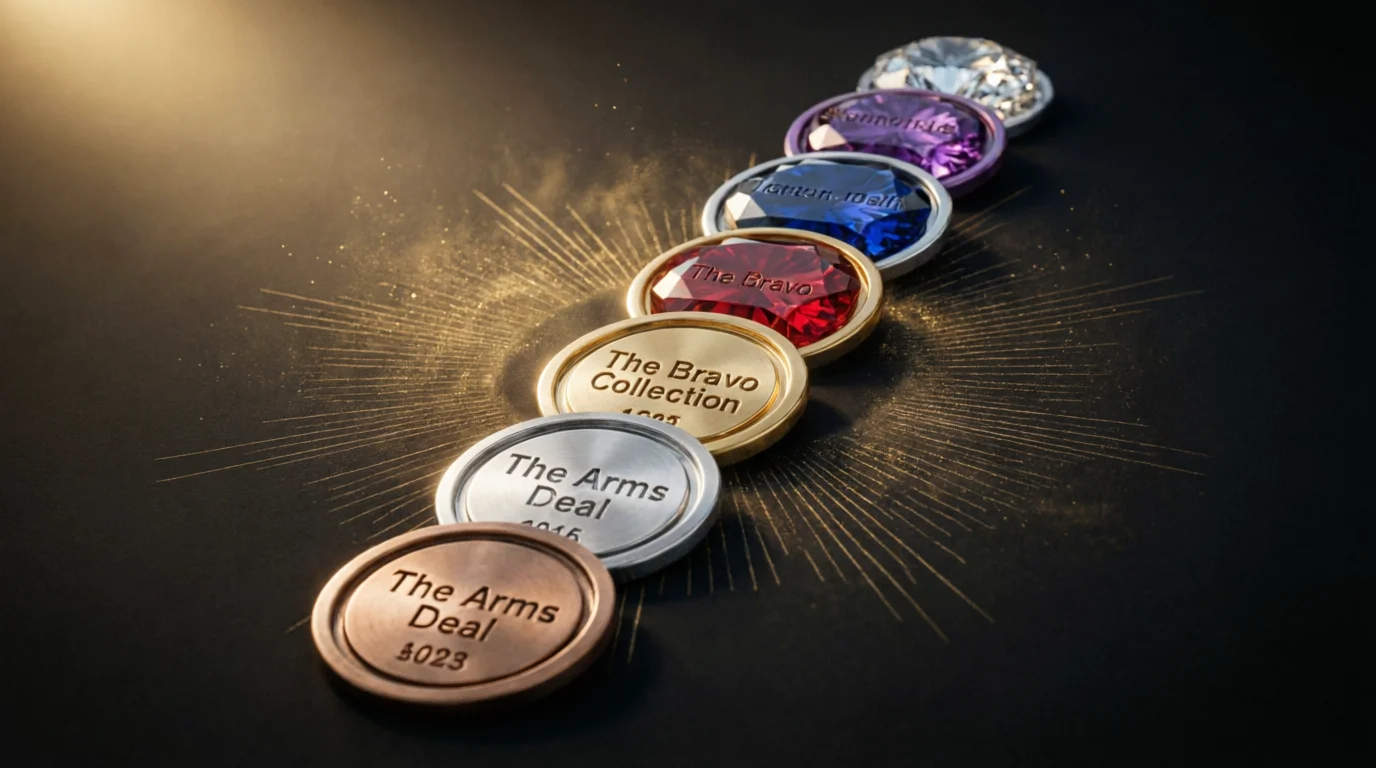
Breakout is a landmark operation for two massive reasons. First, it introduced Challenge Coins. You didn't just buy the pass; you had to complete specific objectives to upgrade your coin from Bronze to Silver to Gold. This added a grind and a tangible goal. Second, and more importantly, it gave us the first-ever operation-exclusive weapon finishes: the Breakout Collection.
Operation Vanguard (November 2014 – March 2015)
Operation Bloodhound (May 2015 – September 2015)
Bloodhound marked a major shift in presentation and a step towards the "CS:GO as an RPG" feel. It introduced the Profile Rank system, replacing the old XP-based ranks with a permanent, reset-able profile level. The campaign was story-driven, following the exploits of the operatives "B" and "K". It was ambitious.
Operation Wildfire (February 2016 – June 2016)
Reception was good. The Nuke Collection created a farming frenzy on the map, and the co-op mode was a fun diversion. But when it ended in June 2016, nobody expected the drought that followed. The operation model went silent. For over a year, the community asked: "When's the next operation?"
Operation Hydra (May 2017 – November 2017)
After a painful 11-month wait, Hydra arrived. It was a "mega-operation," bundling in previous game modes like Wingman and Weapons Course. Its main feature was the Hydra Event, a series of limited-time modes that rotated weekly. It was a fun package but felt like a "greatest hits" compilation.
Operation Shattered Web (November 2019 – March 2020)
This was the revolution. Shattered Web didn't just change operations; it changed CS:GO's entire monetization strategy. It introduced:
- The Battle Pass System: A 100-tier, free and paid reward track.
- Agents: Playable character skins, a controversial but monumental addition.
- Operation Stars: A currency to directly purchase rewards from the pass.
- Exclusive, Untradeable Knives: The first-ever driver gloves and the Shattered Web Knives (like the Nomad and Stiletto) were only obtainable via the pass.
Operation Broken Fang (December 2020 – April 2021)
Broken Fang refined the Shattered Web formula. Another battle pass, more agents, and a new twist: the Broken Fang Premier Mode, a queue for the operation's new map pool with a pick/ban system. It also added the long-requested Retakes mode officially.
Operation Riptide (September 2021 – February 2022)
The Great Hiatus and the CS2 Question
It's now been over two years since Riptide ended. This is the longest gap between operations in CS history, dwarfing the wait before Hydra.
So, when is the next one? For CS2, it's not a matter of if, but when and what form. The old 4-6 month operation cycle is dead. Valve's model now is clearly the big, seasonal battle pass—a model perfected in Shattered Web, Broken Fang, and Riptide.
From what I've seen watching the market, Valve is likely waiting for CS2's foundations to solidify. The game needs its core gameplay, anti-cheat, and performance issues firmly settled before layering on a massive, economy-shaking battle pass. A new operation would introduce a new case, new collections, new agents, and new gloves/knives. That's a huge injection into the skin economy, which is already volatile in CS2.
I personally think we'll see the next "operation" (probably called a "CS2 Battle Pass Season 1") in late 2024, perhaps around the one-year anniversary of CS2's full release. It will follow the Shattered Web blueprint: a paid pass, agent rewards, an exclusive case, and a map-based collection with a potential mega-rare like an AWP Fade. They might even integrate it with the new Premier mode and leaderboards.
The community is antsy, but Valve knows the stakes. The first CS2 operation needs to be a slam dunk—it will set the tone for the next decade of the game's life, both in gameplay and its billion-dollar skin economy. They're not just designing missions; they're calibrating a market. We're not just waiting for new content; we're waiting for the next chapter in CS2's financial and cultural engine to fire up. And when it does, the market will move. Count on it.