Splitting the Spectrum: The Complete Guide to Every CS2 Doppler Phase
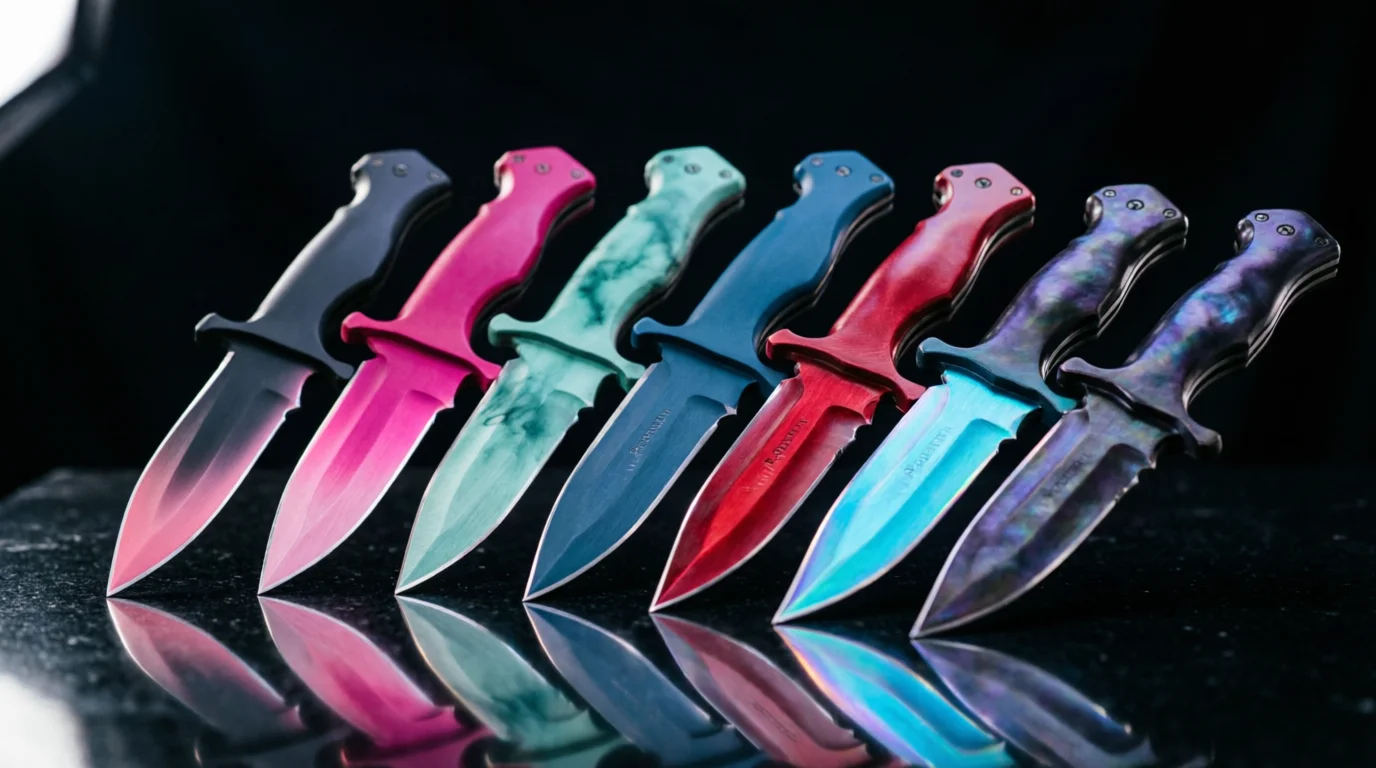
Honestly, there's no skin finish in CS2 that confuses new traders more than Doppler. You'll see someone listing a "P2 Pink Galaxy" for double the price of a "P3" and think they're full of it—until you realize the difference is literally the difference between a $5,000 knife and a $2,500 one. Doppler phases aren't just cosmetic preferences; they're the single most important price differentiator on high-tier knives. Let me break down exactly what makes each phase tick, why some are worth a fortune, and which knives absolutely need a specific phase to look their best.
What Actually Determines a Doppler Phase?
Here's the technical bit that most guides overcomplicate. Every Doppler skin has a "paint seed"—a hidden number between 0 and 999 that the game uses to generate the color pattern. The phase isn't some random roll; it's directly tied to that seed. Phase 1 occupies roughly seeds 0-249, Phase 2 is 250-499, Phase 3 is 500-749, and Phase 4 is 750-999. The special patterns—Ruby, Sapphire, and Black Pearl—have dedicated seed ranges that override the normal phase system entirely.
The float cap for Dopplers is 0.08, meaning you'll never see a Battle-Scarred one. Factory New is the only wear that matters here, though some very specific MW Dopplers exist from early drops. Nobody buys a MW Doppler unless it's dirt cheap or a special pattern.
The Four Standard Phases
Phase 1: The Dark Horse
Phase 1 Dopplers are mostly black with pink accents. On most knives, the play side is dominated by a deep, almost void-like black that bleeds into pinkish-purple edges. Think of it as the "night sky" phase—pink stars scattered across a dark canvas.
The bad: The black-heavy pattern means less color showing. On smaller blades—think Flip Knife or Gut Knife—Phase 1 can look almost solid black from certain angles. That's not necessarily bad, but it doesn't scream "I spent real money on this."
Best knives for Phase 1:
- Karambit – The curved blade actually shows the pink gradient beautifully on the play side. The black spine contrasts well.
- Talon Knife – The aggressive shape catches the pink highlights in a way that makes the dark base feel intentional.
- M9 Bayonet – Only if you get a "fake black pearl" pattern with heavy black coverage. Otherwise, the pink can look washed out.
Worst knives for Phase 1:
- Butterfly Knife – The inspect animation shows the blade from every angle, and Phase 1's black patches look dull. You want color on a Butterfly.
- Stiletto – Too small. You'll barely see the pink.
Phase 2: The Community Favorite
Phase 2 is the golden child of standard Dopplers. These have the most pink and purple coverage, often with a vibrant magenta-purple core that shifts to bright pink near the edges. On a good P2, the play side looks like a cosmic pink explosion.
The catch: Not all P2s are created equal. The "max pink" patterns—where the play side is almost entirely pink with minimal black—can fetch an extra 10-20% on top of standard P2 pricing. The "pink galaxy" patterns with heavy purple concentrations are also highly sought after. If you're buying a P2, ask for screenshots of the play side. Don't rely on inspect servers alone.
Best knives for Phase 2:
- Butterfly Knife – The large, flat blade surface shows the pink better than almost any other knife. The flipping animation makes it look like you're holding a piece of a nebula.
- Karambit – The curved blade creates a natural gradient where pink dominates the cutting edge. Absolutely stunning.
- M9 Bayonet – The wide blade catches the pink well, though the tip can sometimes show black. Look for "clean" P2s with minimal tip black.
- Talon Knife – The angular design actually works great here. The pink catches on the facets.
Worst knives for Phase 2:
- Bowie Knife – The blade shape is awkward, and the pink doesn't distribute evenly.
- Shadow Daggers – You'll barely see the phase. Don't waste money.
Phase 3: The Green-Blue Stepchild
Phase 3 is the most misunderstood phase. It's primarily green, blue, and black, with very little pink or purple. Most of the community sees it as the "ugly" phase—and honestly, on most knives, it is. Phase 3s are almost always the cheapest standard phase, often trading at 10-20% below Phase 1 pricing.
Nobody talks about this, but Phase 3 actually has some hidden gems. On knives with high amounts of blue, Phase 3 can look closer to a Phase 4 than you'd expect. The issue is that the green tones clash with the typical "red/pink/blue" aesthetic that Doppler buyers want. If you're on a tight budget and just want a Doppler for the status, Phase 3 is your move.
The reality check: Phase 3 is the only standard phase where "bad pattern" actually matters. A green-heavy P3 on a Butterfly Knife looks like something you'd find in a bargain bin. But a blue-heavy P3 on an M9 Bayonet can fool 90% of players into thinking it's a Phase 4. I've seen people flip P3s as P4s on marketplaces—not that I'd recommend that.
Best knives for Phase 3:
- M9 Bayonet – The blue-heavy patterns can look surprisingly clean. Avoid green.
- Karambit – The blue spine effect can be pleasant, though the green on the blade is hard to hide.
- Bowie Knife – Honestly, Phase 3 might be the best looking on this knife because the green tones match the blade shape.
Worst knives for Phase 3:
- Butterfly Knife – Avoid at all costs. The green looks sickly.
- Stiletto – Too small. You'll just see dark green.
- Flip Knife – The curved blade shows green in an unflattering way.
Phase 4: The Blue Beauty
Phase 4 is the second most popular standard phase, right behind Phase 2. These are dominated by deep blue tones with black accents and occasional hints of purple. On a good P4, the play side looks like ocean depths—rich, dark blue that shifts to lighter cyan near the edges.
Best knives for Phase 4:
- Karambit – The blue gradient along the curve is gorgeous. Phase 4 Karambits are arguably the best-looking standard phase.
- Butterfly Knife – Blue Butterfly Dopplers are incredibly popular. The Butterfly Knife | Doppler Sapphire at $7,403 is the dream, but a good P4 Butterfly gets you 90% of the look for half the price.
- M9 Bayonet – The wide blade catches the blue beautifully. Look for "clean" patterns without black spots on the play side.
- Talon Knife – The sharp angles create a nice blue reflection.
Worst knives for Phase 4:
- Gut Knife – Too much black in the pattern. The blue doesn't pop.
- Shadow Daggers – The dual blades show different amounts of blue. It looks inconsistent.
The Holy Trinity: Ruby, Sapphire, and Black Pearl
Now we're talking real money. These aren't phases in the traditional sense—they're entirely separate patterns that override the standard seed system. You can't get a Ruby from a Phase 2 roll. These are their own beasts, with dedicated seed ranges that produce specific colors.
Ruby: The Red Dragon
Ruby Dopplers are pure, vibrant red with almost no black. The color is consistent across the entire blade—no gradients, no patches. It's just... red. Intense, eye-searing, "I spent a mortgage payment on a knife" red.
The visual: Ruby looks best on knives with large, flat blade surfaces. The Butterfly Knife Ruby is arguably the most visually striking knife in CS2—the red catches the light during the spin animation in a way that makes other knives look dull. The Karambit Ruby has a darker, more menacing look because the curved blade creates shadows.
Best knives for Ruby:
- Butterfly Knife – The absolute king. The Butterfly Knife | Doppler Ruby is the holy grail for many collectors.
- M9 Bayonet – The wide blade shows the red perfectly. Classic.
- Karambit – The red on the curved blade is aggressive and stunning.
- Talon Knife – Actually underrated. The sharp facets catch the red beautifully.
Sapphire: The Blue Dream
Sapphire Dopplers are the direct counterpart to Ruby—pure, vibrant blue across the entire blade. The color is deeper and richer than Phase 4's blue, with almost no black interference. On a good Sapphire, the blade looks like it's made of liquid sky.
The visual: Sapphire has a cooler, more "metallic" look than Ruby. The blue is less intense in bright lighting but looks deeper in darker environments. The real kicker is that Sapphire pairs incredibly well with blue-themed inventories—Fade gloves, Vice gloves, anything with cool tones.
Best knives for Sapphire:
- Butterfly Knife – The blue spin is hypnotic. The Butterfly Knife | Doppler Sapphire is a top-tier flex.
- Karambit – The blue curve is elegant. Many prefer this over Ruby on the Karambit.
- M9 Bayonet – The cheaper price makes it the most accessible Sapphire option.
- Talon Knife – The blue on the aggressive angles looks modern and clean.
Black Pearl: The Dark Lord
Black Pearl is the rarest and most misunderstood of the special patterns. It's not actually black—it's a deep, iridescent dark purple that shifts to blue, green, and sometimes pink depending on the lighting. The effect is subtle compared to Ruby or Sapphire, but that's exactly why collectors love it.
Why so expensive? Black Pearls are the rarest pattern across all Doppler knives. For every Ruby or Sapphire that drops, there's maybe one Black Pearl. The supply is tiny, and the demand from high-tier collectors is massive. The visual is also polarizing—some people see it as "just a dark knife" and don't get the hype. Others see the subtle color shifts and consider it the ultimate flex.
The visual: Black Pearl looks best in bright lighting where the iridescence is visible. In dark environments, it genuinely looks black. The effect is most noticeable on the Butterfly Knife, where the spin animation catches light from every angle. The Karambit Black Pearl has a more subdued look that some find "classy."
Best knives for Black Pearl:
- Butterfly Knife – The undisputed king. The Butterfly Knife | Doppler Black Pearl at $12,547 is the ultimate collector piece.
- Karambit – The curved blade shows the iridescence well. A close second.
- M9 Bayonet – The wide blade can look almost solid black, which some prefer.
- Talon Knife – Underrated. The sharp angles catch the color shifts nicely.
The Gamma Doppler Exception
I won't go deep into Gammas here, but know that Emerald is the most expensive Gamma pattern, followed by Phase 2 (most green), Phase 4 (most cyan), Phase 1 (black/green), and Phase 3 (most black/ugly green).
Price Premiums: The Quick Reference
Here's a rough breakdown of how phases affect pricing on the most popular knives. These are estimates based on market observation, not exact numbers.
| Phase | Butterfly | Karambit | M9 Bayonet | Talon |
|---|---|---|---|---|
| P1 | ~$3,500 | ~$3,000 | ~$3,200 | ~$1,800 |
| P2 | ~$4,900 | ~$4,200 | ~$4,500 | ~$2,500 |
| P3 | ~$3,200 | ~$2,800 | ~$3,000 | ~$1,700 |
| P4 | ~$4,000 | ~$3,500 | ~$3,800 | ~$2,100 |
| Ruby | ~$10,379 | ~$7,682 | ~$8,691 | ~$3,236 |
| Sapphire | ~$7,403 | ~$5,278 | ~$5,018 | ~$2,800 |
| Black Pearl | ~$12,547 | ~$9,729 | ~$10,153 | ~$3,287 |
Note: These are rough estimates and change daily. Always check current market prices before buying or selling.
Which Phase Should You Buy?
If you're on a budget: Phase 3. It's the cheapest, and on the right knife (M9 Bayonet, Bowie), it can look decent. Don't buy a Phase 3 Butterfly unless you're okay with being disappointed.
If you want the best value: Phase 1. You get the Doppler status symbol without paying the pink premium. On a Karambit or Talon, Phase 1 looks genuinely good.
If you want to flex: Phase 2 on a Butterfly or Karambit. The pink is universally loved, and you'll get compliments in every game.
If you're investing: Ruby and Sapphire have historically held their value better than standard phases. The