Cache Is Back — and It Matters
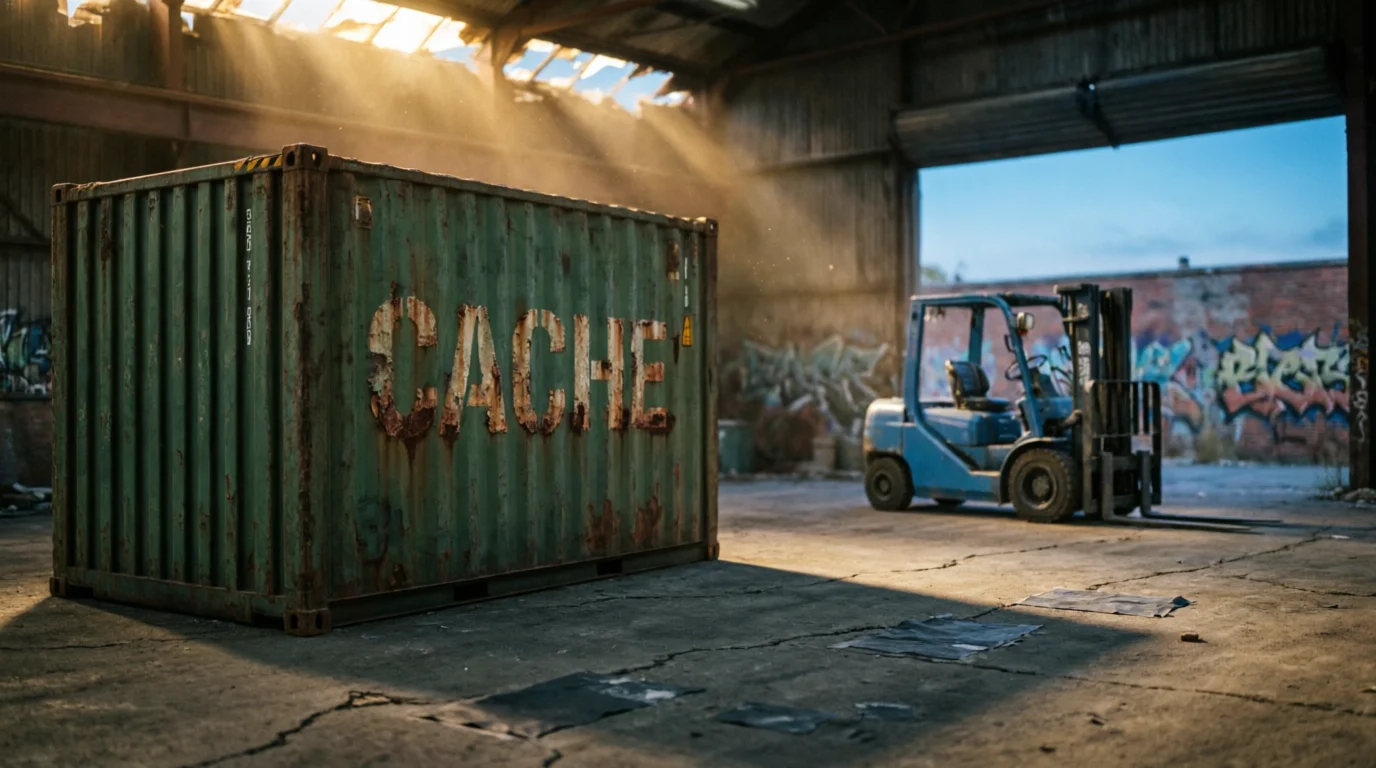
Today, Cache officially returned to Counter-Strike 2. For veteran players, this isn't just another map rotation — it's the comeback of one of the most recognizable, community-born maps in CS history.
Cache has always occupied a unique position: a community-made map that earned its way into official tournaments, Active Duty status, and the collective muscle memory of millions of players. Its return to CS2 is equal parts nostalgia and genuine competitive excitement.
What This Update Means
If Train's return was about restoring competitive order, Cache's comeback is a pure emotional payoff. Valve teased it through social media visuals and "see you next week" signals throughout late April 2026, building anticipation to a fever pitch before the official drop.
For the average player, Cache coming back delivers three things:
- A missing piece of CS heritage restored — Cache fills a major gap in CS2's classic map lineup
- Fresh energy for matchmaking and community servers — expect surging queue times and workshop content
- A wave of returning players — old strats, old callouts, and old friends are all coming back online
Why Cache Is Special
Cache holds perhaps the rarest title in Counter-Strike: a community-created map that broke into top-tier professional play. Liquipedia credits it as a bomb-defusal map created by FMPONE, Volcano, and penE — and for years it stood as the gold standard of what community mapmakers could achieve.
Its appeal goes beyond clever sightlines. Cache is readable. A-site, B-site, mid, highway, whitebox, forklift, B-halls, vents — these callouts are so universally known that they function less as map labels and more as shared vocabulary. That's the mark of a truly iconic map.
The Origin: Counter-Strike Source (2011)
Cache didn't start life in CS:GO. The original de_cache was created by Sal "Volcano" Garozzo, with the final version releasing on May 16, 2011 for Counter-Strike: Source. That first iteration established the industrial-zone aesthetic and the fundamental layout skeleton that would endure for over a decade.
The map was then ported to Counter-Strike: Global Offensive on December 1, 2012. The CS:GO version players came to love was the product of years of iteration — not a single flash of design genius.
FMPONE's Overhaul: The Map Becomes a Legend
Starting May 23, 2013, FMPONE — with Volcano's blessing — began a comprehensive visual overhaul of Cache. FMPONE has described Cache as one of his most exciting projects, taking ownership of the world-building, art direction, and asset creation while maintaining a deep feedback loop with the community post-launch.
This was the inflection point. FMPONE's work transformed Cache from "promising community map" into a polished, tournament-ready experience. The green industrial palette, the Russian facility vibe, the crisp combat spaces — all of these signature elements trace back to this redesign.
Entering the Official Stage
Cache first appeared in Valve's ecosystem through Operation Bravo, then steadily climbed toward full competitive legitimacy. It became one of CS:GO's defining competitive maps and a regular fixture in Major tournaments.
The map's combination of spectator-friendly mid battles and clear strategic reads made it a broadcast favorite. When fans remember Cache, they remember the pace — the instant a team commits mid, the round's tempo shifts, and that kinetic energy defined countless pro matches.
2019: Leaving Active Duty
In March 2019, Cache was removed from the Active Duty pool. Liquipedia explicitly notes it left to await FMPONE's next-generation overhaul, and for many longtime players this was the first time Cache's future felt genuinely uncertain.
Later that year, the redesigned Cache was revealed with significantly updated visuals and lighting. While it didn't immediately return to the core competitive rotation, it existed in a state of perpetual anticipation — everyone knew it would come back, just not when.
The CS2 Version: Not a Port, a Reimagining
Cache's CS2 incarnation isn't a simple copy-paste of the old BSP. Source 2 brings fundamentally different lighting, material rendering, and visibility characteristics. Reports throughout 2025–2026 confirmed that the new Cache would feature adjusted sightlines, modern material work, and clarity improvements tailored to CS2's engine capabilities.
What players are loading into today preserves the classic skeleton — the timings, the angles, the flow — while delivering a visual and tactical experience that feels native to CS2 rather than imported from a previous era. Familiar but fresh. Classic without being a museum piece.
Why Players Care This Much
Cache carries more than tactical value. It carries an entire generation's worth of clutch rounds, B-rush defaults, A-main executes, Squeaky plays, and late-night sessions with friends. That emotional connection is something no newly designed map can manufacture.
Beyond nostalgia, Cache possesses a rare quality: it's immediately legible to newcomers while offering depth that rewards thousands of hours. It works in matchmaking and it works in tournaments. That versatility — plus over a decade of community love — is why its return feels like an event rather than just a patch note.
TL;DR
Cache is back in CS2 as of April 2026. Originally built by Volcano in CS:Source (2011), redesigned by FMPONE (2013), a CS:GO Active Duty staple for years, removed in 2019, and now reborn for Source 2 — this is the full-circle moment the community has waited for. Load it up. The forklift awaits.