In 2026, serious analysts increasingly describe CS2 skins as an alternative asset class: they have price discovery, liquidity tiers, boom-bust cycles, and portfolio logic that mirrors collectibles and art markets more than in-game cosmetics.
The question is no longer "do skins have value?"—it is "what kind of value, for whom, and with what risk?"
Market Cap and Cycles: What Are You Actually Buying?
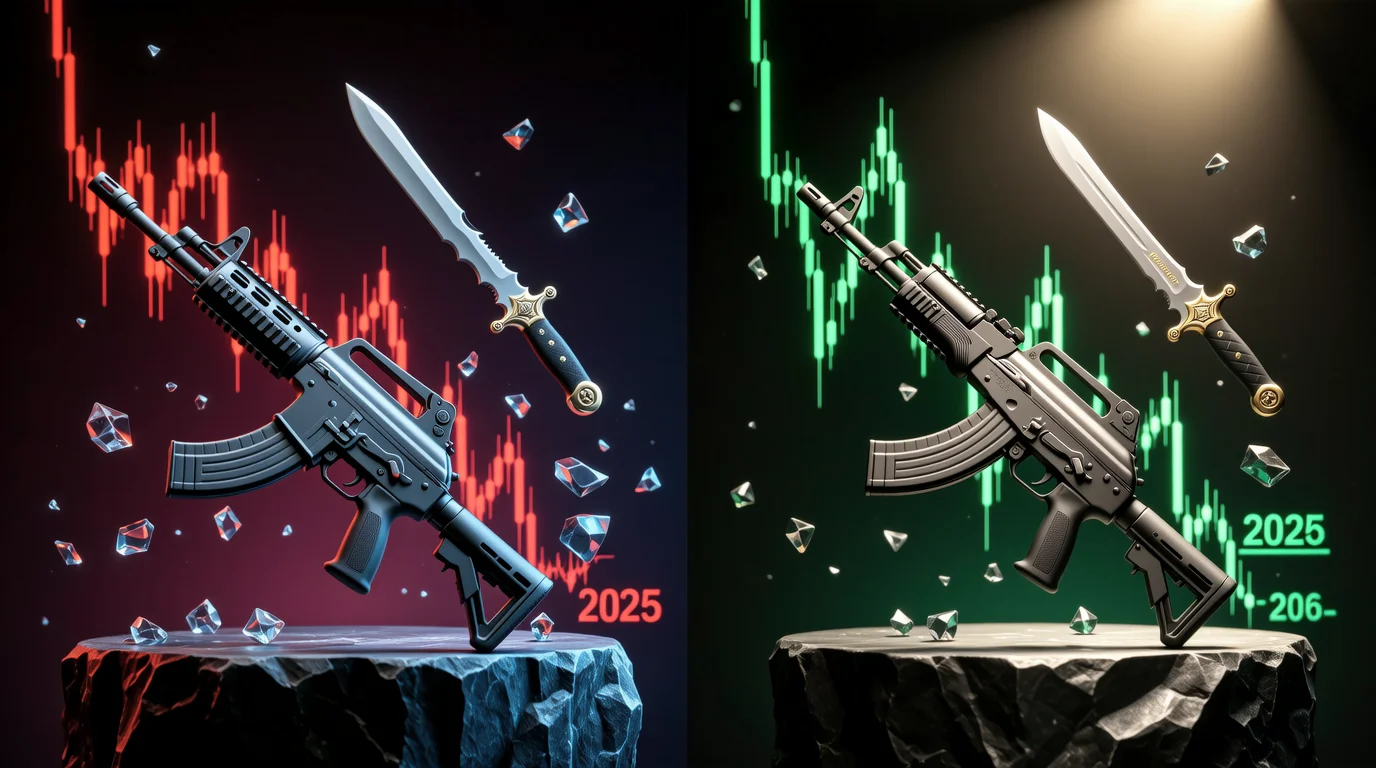
CS2 skins went through a full bubble → crash → repair cycle between 2025 and 2026.
Multiple third-party trackers (SkinVS, take.skin database, SkinScanner) outline a similar macro arc—exact prints vary by methodology:
| Milestone | Estimated total market cap |
|---|---|
| Early 2025 peak | ~$14B+ (some trackers; methodology-dependent) |
| Pre-October 2025 baseline | ~$5.9B–$6.5B (narrower item-universe estimates) |
| Oct 22–23, 2025 crash (48 hrs) | ~$2–3B erased (Pley.gg: ~$2.4B in first 29 hours) |
| Post-crash bottom (late Oct 2025) | ~$3.37B |
| January 2026 | ~$4.5B |
| March 2026 | ~$5.8B |
| June 24, 2026 | ~$7.27B (take.skin / SkinVS print) |
| August 2026 (consolidation) | ~$6.5B–$7.2B |
This was not a clean V-shaped bounce. Recovery was segmented:
- Craftable knives and gloves lost the most in the crash—and recovered unevenly as players repriced supply around the new five-Covert trade-up route
- Non-craftable rarities (Howl, Dragon Lore, Katowice crafts, blue gems) held better and led the rebound
- $1–5 play skins stayed relatively stable because they track active player demand, not whale speculation
Before asking "should I invest?", define which tier you mean. A Dragon Lore thesis is nothing like a Revolution-case float-spec gamble.
Deep dive: CS2 Market Cap Analysis.
What Triggered the October 2025 Crash
On October 22–23, 2025, Valve shipped a CS2 update that changed skin economics structurally:
- Five regular Covert skins → one regular knife or gloves from the input collections
- Five StatTrak Covert skins → one StatTrak knife (no StatTrak gloves exist)
- StatTrak and non-StatTrak inputs cannot be mixed
For over a decade, knives and gloves were case-only "gold" drops. Adding a craft route increased effective supply overnight. Knife segments saw 50–70% drawdowns on craftable finishes; Covert input skins spiked as traders bought contract material.
The lesson for 2026 investors: virtual scarcity is policy-dependent. Valve can create new supply paths with a single patch—exactly as it did here.
Read the mechanics breakdown in our trade-up formula normalization guide.
Which Categories Still Have Investment Logic in 2026?
2026 investment guides converge on a tiered framework—not every skin is investable, but some categories retain clear supply-demand stories. Past performance ranges below are illustrative community benchmarks, not guarantees.
1. Blue-chip / core premium skins
Ultra-scarce, globally recognized items with near-fixed supply unaffected by the October trade-up change:
- AWP | Dragon Lore (Cobblestone collection — discontinued)
- M4A4 | Howl (Contraband — removed from drop pool)
- Karambit | Doppler Sapphire / Ruby tiers (case gold — craftable but still low absolute supply)
Historical guides often cite ~15–30% annual appreciation for this tier in stable macro periods. Post-crash, returns are path-dependent on entry price.
Explore: Best CS2 Skins for Investment | Most Expensive CS2 Skins
2. Mid-tier high-liquidity skins
Skins with both play demand and trade-up/collection utility:
These benefit from daily loadout demand providing a price floor. Guides cite ~25–50% upside potential in bullish cycles—with materially lower tail risk than pure specs because liquidity is deep.
3. Discontinued cases and Major stickers
Cases consumed on every unboxing have shrinking supply curves. Major tournament stickers are sold for limited windows, then removed forever.
- Strategy: accumulate capsules late in Major sales or during sentiment lows
- Historical bullish-guide ranges: ~30–60% annually—but liquidity varies wildly by tournament and team
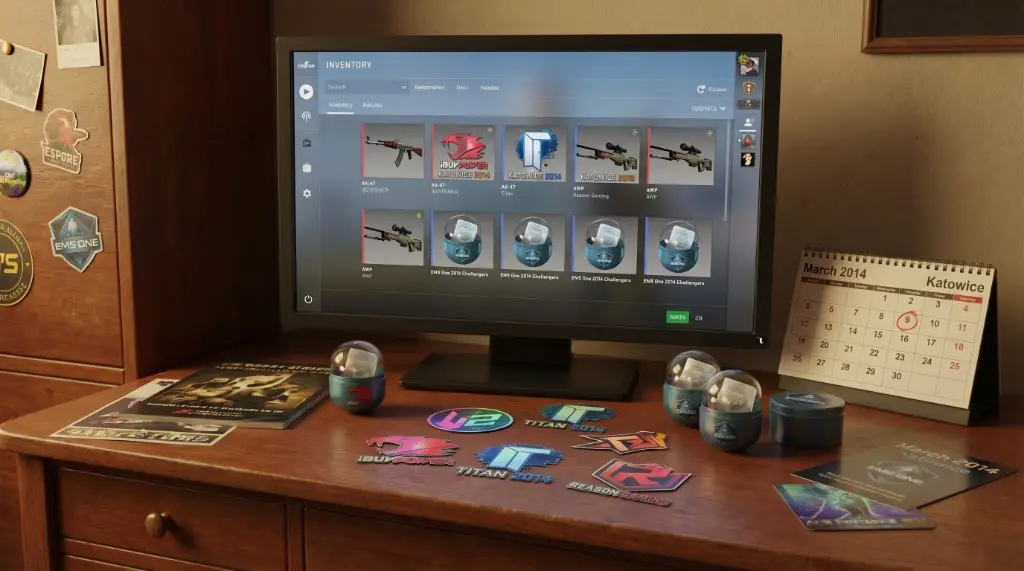
Read: How CS2 Majors Affect Prices | Katowice 2014 Stickers Guide
4. High-risk specs (new collections, pattern hunts)
This is the convex or zero bucket—low-float Revolution skins, pattern-dependent Case Hardened plays, hype-cycle new releases.
Rational 2026 portfolio thinking: cap this sleeve at roughly ~20% of skin exposure. It is a convex bet, not a foundation.
Market Structure Shifts in 2026
Beyond price levels, the infrastructure around skin investing matured:
- Platform consolidation — SkinBid's November 2025 bankruptcy and Skinport's January 2026 acquisition signal that EU-compliant P2P is expensive to operate; fewer, larger players may dominate Western cash-out
- Chinese liquidity anchor — Buff163 pricing still leads Western markets on many liquid items (see how Chinese collectors changed CS2)
- Regulatory tightening — EU AML Regulation (2024/1624) takes full effect July 10, 2027, increasing KYC friction on fiat gateways (see CS2 money laundering risks)
These are not reasons to avoid the market—but they change execution cost and exit paths.
Risks: Crash, Policy, and Platform—No Longer Theoretical
Every serious 2026 analysis opens with the same line: only deploy capital you can afford to lose.
The October 2025 crash proved virtual scarcity ≠ safety. Valve updates, trade-up changes, and drop-rate tweaks can rewrite pricing logic in days.
| Risk type | What happened / what to watch |
|---|---|
| Platform / game policy | Five-Covert knife trade-up triggered ~$2–3B cap loss in 48 hours |
| Liquidity | Premium items may not find buyers when you need to exit |
| Regulation & tax | Skin cash-out platforms face KYC/AML scrutiny; profits may be taxable |
| Security | API scams and phishing still drain inventories |
| Fee drag | P2P fees (2–8%), Steam tax (15%), and 7-day trade holds erode short-term ROI |
Read: Are CS2 Skins a Good Investment? | CS2 Scams Ultimate Guide
So… Is It Still Worth Investing in 2026?
The honest answer:
Yes—if you treat CS2 skins as a high-volatility collectible sleeve funded with risk capital, understand category-level supply stories, and accept that Valve can change the rules.
No—if you need bond-like stability or plan to deploy essential living expenses. One update can reset the entire market. That already happened in October 2025.
Practical take.skin playbook
- Price your inventory honestly — use take.skin to mark every item to live cross-market values
- Segment by tier — blue chips, liquid plays, cases/stickers, and specs should not be one undifferentiated bag
- Size positions — if a 50% drawdown would change your life, the position is too large
- Model fees and holds — a "+30% paper gain" after 8% seller fee, 15% Steam tax, and a 7-day lock is a very different number
- Trade safely — follow our trading safety guide and use verified platforms from best CS2 trading sites
CS2 skins in 2026 are still an asset—for people who respect the risk. For everyone else, they are still great loadout upgrades. Know which camp you are in before you buy.