You sold the AK three years ago during a rank slump. You forgot the float. You forgot the name tag. Then one night you scroll CSFloat and see it — same stickers, same scrape pattern on slot 3, same "retirement fund" name tag you thought was cringe at the time.
Your heart rate spikes. That is not nostalgia for a skin model. That is digital provenance — the feeling that a specific, unrepeatable object from your past still exists somewhere on the market, waiting to come home.
This is why rebuying your old CS2 crafts hits different.
What "Digital Provenance" Means in CS2
In art and collectibles, provenance is the documented chain of ownership. CS2 skins have something similar, but encoded in server-side item metadata rather than paper certificates.
Every weapon, knife, or glove in your inventory is a unique item ID with a bundle of immutable properties:
| Property | What it stores | Why it matters |
|---|---|---|
| Float value | Wear from 0.00000000000000 to 1.00000000000000 (14 decimal places exposed in APIs) | Determines scratch density and which wear tier (FN/MW/FT/WW/BS) the skin displays |
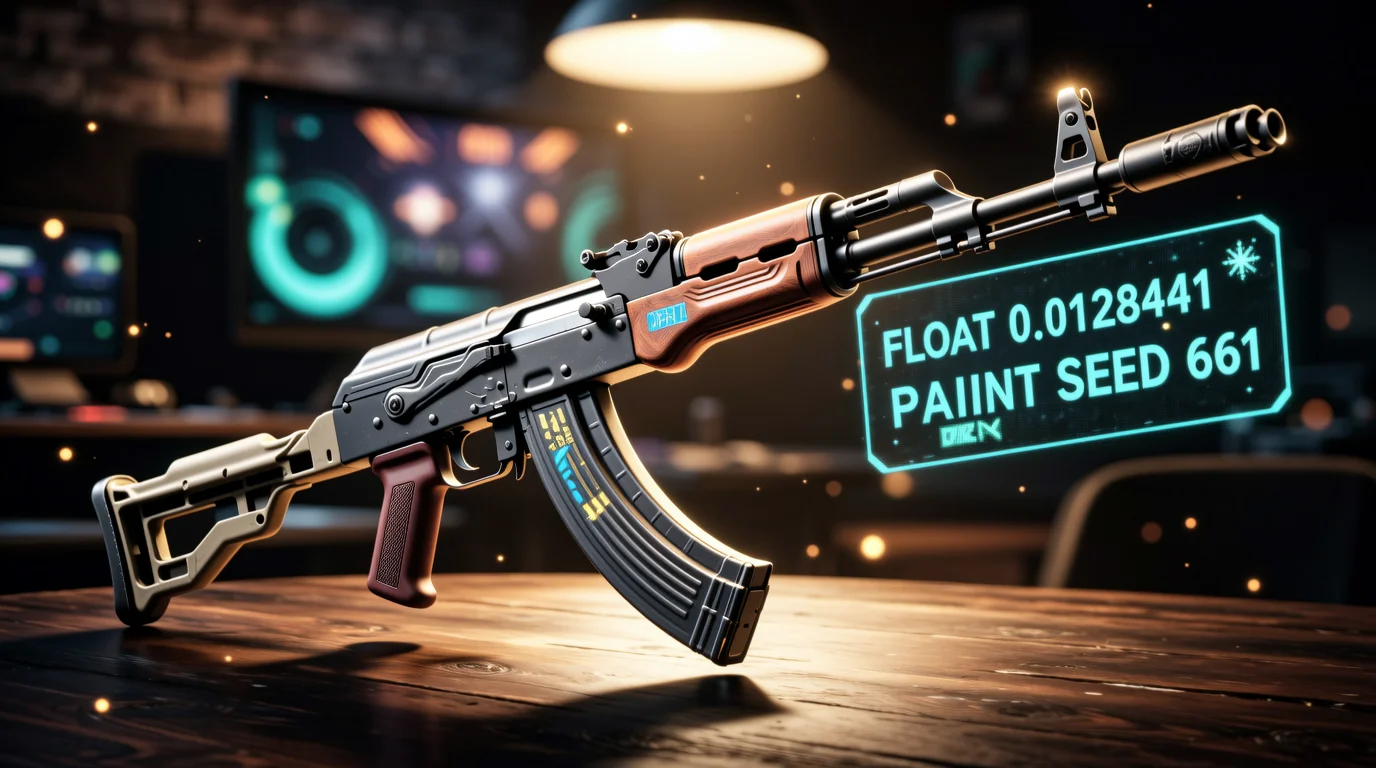
| Paint seed | Integer 1–1000 | Controls pattern placement — critical for Case Hardened blues, Fade percentages, Marble Fade tips |
| Applied stickers | Up to 5 slots with sticker ID + wear/scrape % + positional offsets | Two "identical" four-Kato crafts can differ in placement and holo fade |
| Name tag | Custom UTF-8 string (if applied) | Purely personal — but often the emotional anchor |
| StatTrak™ counter | Kill count on StatTrak variants | Adds another layer of "this was my gun" history |
None of these can be edited after creation. You can scrape stickers further through gameplay, but you cannot reset float, re-roll seed, or clone the item.
That is the fingerprint.
Float: More Precision Than the UI Shows
The in-game inspect panel rounds float to eight digits. Marketplace APIs and tools like CSFloat expose full precision — often 14 decimal places.
$12 might look identical in screenshots. One at 0.15000012 sits at the FN/FT border visually; another at 0.37999998 looks battle-worn. Collectors hunting "clean FT" or rank #1 low-float pay premiums that generic listings never capture.For craft reunion stories, float is often the first number you remember — especially if you obsessed over a 0.069 meme float or a `#1 position on a float database.
Best practice: Screenshot or export the full inspect link when you list a sentimental craft. The link encodes asset ID and class ID needed for later searches.
Paint Seed: The Hidden Pattern Roll
Float controls wear. Paint seed controls where the pattern lands.
Examples collectors chase:
- Case Hardened — seed
661on AK-47 Blue Gem tiers - Fade skins — 100% fade vs 80% fade is seed-driven, not float-driven
- Marble Fade — red tip vs gold tip
If your old craft was a pattern-specific flex — a "fake red tip" Karambit or a "max green" Emerald — the paint seed is as important as the stickers.
When searching P2P markets, combine float range filters and seed filters. On Buff, advanced search supports paint seed. CSFloat's database search allows seed + sticker queries.
Sticker Crafts: Coordinates Are Part of the Identity
Applying stickers is not binary. Each slot stores:
- Sticker definition (e.g., Titan Holo Katowice 2014)
- Wear / scrape percentage
- Position and rotation offsets
This is also why "rebuying your craft" differs from "buying the same craft concept":
- Same concept — any four-Titan Fire Serpent
- Same object — the exact item ID you owned, with your scrape history and tag
If you only remember "four Katos on redline," you might rebuild the vibe. If you remember the inspect link, you can hunt the ghost.
Name Tags: Small Text, Big Emotional Weight
A $1.99 name tag does not add market value the way Katowice holos do. It adds story value.
Players tag guns after clutches, inside jokes, ex-partner references, or rank milestones. When you see your old tag on a stranger's listing, the skin stops being a commodity and becomes a time capsule.
If you are trying to reunite with an old craft, search market titles and CSFloat database queries for distinctive tags. Unusual Unicode tags are easier to find than "AWP".
Crafting vs Buying: Why the Journey Shapes the Attachment
Economically, buying a finished craft on Skinport or Buff is efficient. Emotionally, self-applied crafts hit harder because you remember:
- The night you unboxed the base skin
- Failing a cheap sticker placement and living with it
- The Discord call where friends voted on holo vs paper
Rebuying your old craft merges both paths: you get the efficiency of purchase with the narrative of your history. That combination is rare in digital goods and explains the CN community posts that go viral — "买回自己曾经的自造" (buying back your own old craft) resonates because it is recovery, not consumption.
How to Track and Rediscover Past Inventories
1. Steam inventory history
Steam keeps a transaction log of market sales and trades. It will not show float, but it shows dates and item names, helping narrow when you owned a craft.
2. Email receipts and marketplace archives
Buff, Skinport, CSFloat, and Steam Market send confirmation emails with listing details. Search your inbox for sticker names or name tags.
3. CSFloat database search
CSFloat indexes floats, seeds, stickers, and tags across listings and historical sales. Power users search by:
- Sticker combo + float range
- Name tag substring
- Exact float if remembered
4. Buff advanced filters
For CN traders, Buff's float and seed filters remain the deepest liquidity pool. Save filter URLs when hunting a reunion craft.
5. Screenshot and inspect-link archives
The highest-success method: maintain a personal crafts/ folder with inspect links. Many collectors export CSVs from third-party inventory trackers after every trade.
6. Community Discord and Reddit reverse lookups
Posting an old screenshot (with censors on sensitive info) sometimes surfaces the current owner — not for negotiation pressure, but for closure or repurchase offers.
Reunion Playbook: Practical Steps
- Gather identifiers — inspect link fragments, float, seed, tag, approximate sale month
- Set CSFloat alerts — saved searches notify when matching items list
- Compare sticker wear photos — slot wear is visible in high-res inspect renders
- Budget for the premium — reunion crafts often cost more than replacements because another human attached story value
- Verify before emotional buy — use official inspect links; never trust cropped screenshots alone
Why This Matters Beyond Sentiment
Understanding fingerprints protects you as a buyer too:
- Spot relisted scams where a similar-but-not-identical craft replaces the original mid-negotiation
- Price crafts with verified history vs unverified "looks the same"
- Build collections where each slot has identity, not just rarity tier
Final Take
Every CS2 skin is technically unique. Most feel interchangeable because we shop by skin name and wear tier. Your old craft is different — it is the one that survived your inventory, your matches, your choices.
Rebuying it is not flexing. It is recovering a version of yourself you encoded into a float, a seed, four stickers, and a dumb name tag at 2 AM.
Save your inspect links. Future you might thank present you.
Verify live listings and prices on take.skin before any reunion purchase.