Contraband Skins: The M4A4 Howl and the Story of Art Theft
In the expansive and lucrative world of Counter-Strike skins, certain items achieve legendary status due to their rarity, aesthetic appeal, or association with iconic esports moments. However, only one skin has achieved true mythical status as a direct result of an international intellectual property scandal.
That skin is the M4A4 | Howl, and it holds a distinction that no other item in the history of Counter-Strike: Global Offensive (and now Counter-Strike 2) has ever held: it is the sole occupant of the Contraband rarity tier.
The story of the M4A4 Howl is a fascinating tale of community creativity, blatant plagiarism, rapid corporate crisis management, and the accidental creation of the ultimate digital collector's item.
The Birth of a Legend: The Huntsman Collection
To understand the magnitude of the Howl, we must travel back to May 1, 2014. Valve released the Huntsman Weapon Case, a highly anticipated update that introduced a collection of community-created weapon finishes. Among the highlights was a stunning Covert (Red) rarity rifle skin: the M4A4 | Howl.
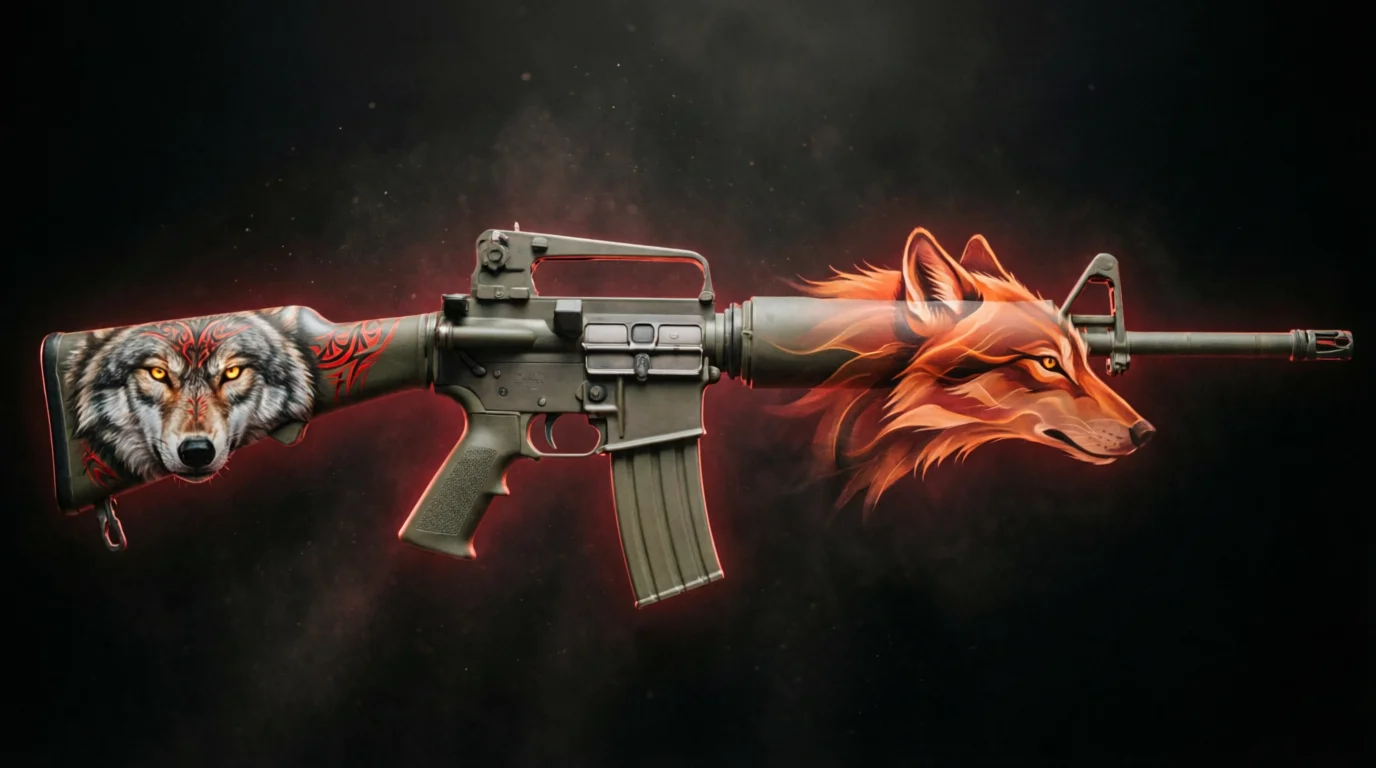
Created by two Steam Workshop contributors going by the aliases Auzzii and sic, the skin featured a fierce, aggressive snarling wolf rendered in striking hues of crimson, orange, and black. Auzzii claimed the artwork was entirely his own creation, supposedly inspired by his dog, while sic handled the technical application of the artwork onto the M4A4 weapon model.
The community reaction was instantaneous. The M4A4 Howl was universally praised for its aggressive design and quickly became one of the most sought-after and expensive skins in the game. Alongside the skin, a matching "Howling Dawn" sticker was also added to the game, expanding the thematic presence of the artwork.
For a few weeks, everything seemed perfect. The creators were earning a percentage of the key sales from the Huntsman Case, players were clamoring to unbox the rifle, and the CS:GO economy was thriving.
The Art Theft Scandal Breaks
In June 2014, the illusion shattered. A DeviantArt user named CanisAlbus discovered that their original artwork—a piece titled "Aggression"—had been lifted without permission, slightly modified, and plastered onto a digital weapon in one of the most popular games on the planet.
Auzzii had not drawn the wolf. He had simply downloaded CanisAlbus's artwork, applied a few filters, and submitted it to the Steam Workshop as his own original creation.
"I am not playing CS:GO and I am not a Steam user either, so I was completely unaware of this until I was informed by a friend," CanisAlbus stated at the time, quickly moving to issue a formal DMCA (Digital Millennium Copyright Act) takedown notice against Valve.
Valve, a company that relies heavily on its community Workshop ecosystem for content generation, found itself in an unprecedented legal and public relations nightmare. Intellectual property theft is a serious offense, and Valve had inadvertently monetized stolen artwork, distributing it to thousands of paying customers.
Valve's Unprecedented Response
Valve had to act swiftly to comply with copyright law, but they also faced a massive dilemma: what do you do with the thousands of players who legitimately purchased, traded for, or unboxed the M4A4 Howl using real money? Simply deleting the item from players' inventories would spark unprecedented outrage and severely damage trust in the budding CS:GO economy.
On June 11, 2014, Valve released an update that changed the Counter-Strike economy forever. Their solution was multifaceted and brilliant:
- Bans and Revocations: The creators, Auzzii and sic, were permanently banned from the Steam Workshop. All proceeds they received from the Huntsman Case were revoked.
- Removal from the Drop Pool: The M4A4 Howl and the Howling Dawn sticker were immediately removed from the Huntsman Weapon Case and the corresponding sticker capsules. They would never be dropped or unboxed again.
- The Redesign: Valve's internal art team completely redesigned the M4A4 Howl and the Howling Dawn sticker. They removed the stolen "Aggression" artwork and replaced it with an original, Valve-created design that maintained the spirit of a roaring, fiery wolf but was legally distinct.
- The "Contraband" Tier: To reflect the extraordinary circumstances, Valve changed the rarity of all existing Howls and Howling Dawn stickers from "Covert" (Red) to a brand new, one-of-a-kind rarity tier: Contraband (Gold).
Furthermore, Valve made it impossible to use Trade-Up contracts to obtain the Howl. The supply of M4A4 Howls was permanently and irrevocably capped.
The Aftermath: The Ultimate Collector's Item
By attempting to resolve a legal headache, Valve inadvertently created the ultimate digital status symbol. Because the supply was permanently frozen while the player base of CS:GO continued to grow exponentially over the next decade, the basic laws of supply and demand took over.
Overnight, the price of the M4A4 Howl skyrocketed. What was once an expensive Covert skin trading for around $50-$100 surged into the thousands.
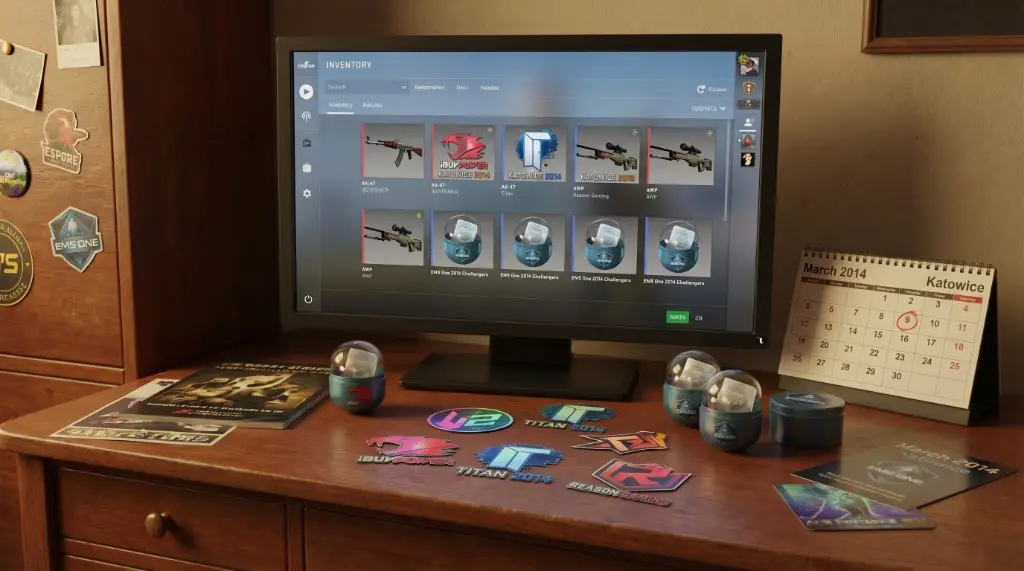
Today, in the CS2 era, the M4A4 Howl remains a holy grail for collectors. A standard Field-Tested Howl can fetch thousands of dollars. The most pristine versions—Factory New StatTrak M4A4 Howls—routinely sell for tens of thousands of dollars. When combined with other impossibly rare items, such as the legendary iBUYPOWER (Holo) Katowice 2014 stickers, the value of a single Howl can easily exceed $100,000 to $150,000 USD.
Legacy and Workshop Reforms
The Howl incident forced Valve to fundamentally change how they handled community submissions. Following the scandal, Valve implemented much stricter review processes for Workshop items. Contributors now have to sign stringent legal agreements verifying the originality of their work, and the community has become highly vigilant, often serving as a self-policing force against potential plagiarism.
Interestingly, there have been other copyright scares since the Howl. The most notable was the M4A4 | Griffin, which faced allegations of copied artwork. Speculators rushed to buy Griffins, hoping it would become the "next Howl." However, Valve learned their lesson. Instead of creating another Contraband item, they simply redesigned the Griffin's artwork and kept its existing rarity and case placement, proving that the Contraband tier would remain exclusive to the Howl.
Conclusion
The M4A4 Howl is much more than just pixels on a screen. It is a physical manifestation of Counter-Strike history. It represents a time when the Workshop was the wild west, and it stands as a monument to Valve's unique approach to handling a massive intellectual property crisis.
For the players who own one, it is a crown jewel. For those who don't, it remains a mythical artifact—the only weapon in the game born from scandal, forged in legality, and immortalized by its Contraband status. When you see a Howl in a CS2 match, you aren't just looking at a gun; you are looking at a living legend.